
Monforte / Edifice™
Govern the AI your organization actually uses.
In development
AI-governance infrastructure designed to operate inside your organization: discover AI, connect every use to accountable people, and produce evidence through the work of governing.

Governance as an operating practice.
Policies, committees and registers need a structure that carries their decisions into everyday work. Edifice is Monforte’s AI-governance infrastructure: a system being developed for organizations to install and operate, connecting responsibilities, decisions, operating conditions and evidence over time.
Its design takes ISO/IEC 42001, the international standard for AI management systems, as its foundation. Applicable regulations, sector requirements and frameworks such as the NIST AI Risk Management Framework provide further obligations and evidence needs within that structure.
The AI use is the starting point.
A platform used for marketing drafts and clinical decision support may be one system, but those uses carry different responsibilities. Edifice organizes governance around the organizational AI use: a specific deployment of AI capability, in a defined business context, for a stated outcome. An inventory of the supporting AI assets sits beneath those uses.
This overview describes the intended design. Engagement scope, availability, integration requirements and support arrangements are confirmed through discussion.
The accountability chain
The role endures. The person succeeds.
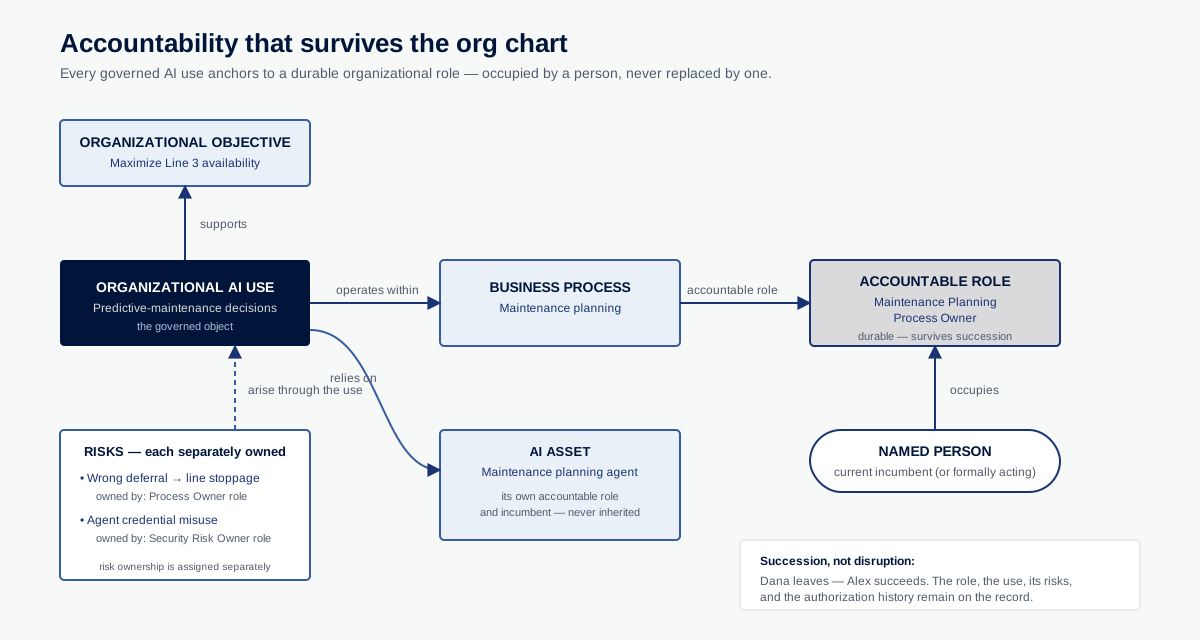
Each governed use is anchored to an accountable organizational role, normally the owner of the business process in which it operates. A named person occupies that role. The process, use and accountability relationship remain identifiable when the incumbent changes.
Risks have their own owning roles. Assets have theirs. An infrastructure steward is responsible for the installation itself. The process owner does not automatically become the owner of every risk or supporting asset.
When someone leaves, succession is recorded. If there is no incumbent or formally acting appointee, the vacancy becomes visible and the affected use is not authorized until accountability is restored. Historical decisions remain attributable to the people and authority in place at the time.
How an organization uses it
A continuous governance lifecycle.
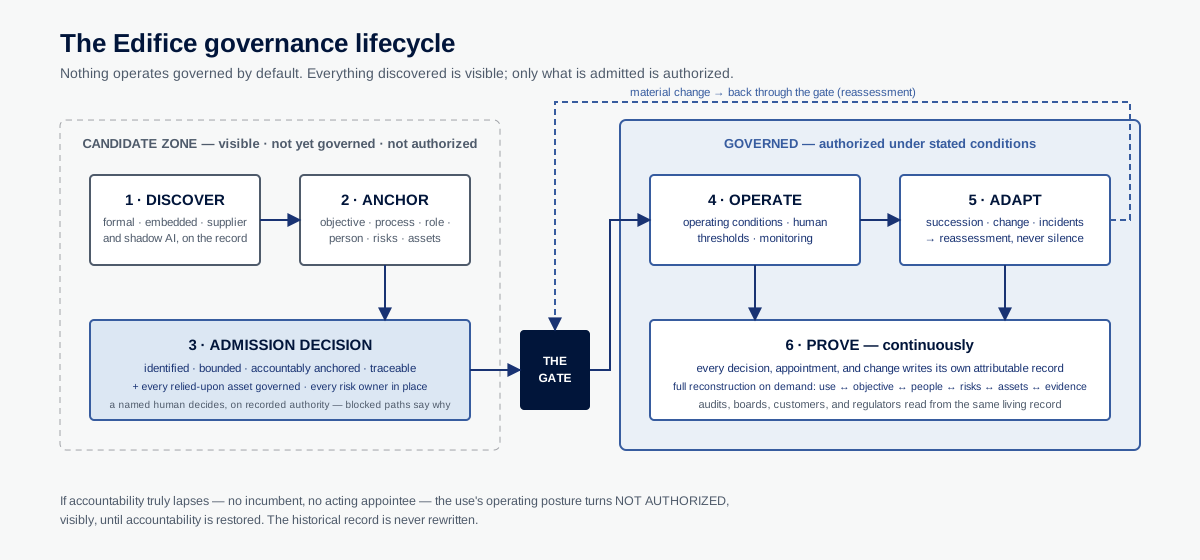
Discovery makes an AI use visible. An explicit admission decision establishes whether it may operate under stated conditions. Monitoring and reassessment keep those conditions connected to changing circumstances.
Discover
Begin with an inventory that may be incomplete. Discovery brings formal deployments, embedded AI, supplier-operated AI and unofficial tools into view. Discovered items enter the record as candidates: visible, but not yet governed or authorized.
Anchor
Connect each intended AI use to its objective, business process, accountable organizational role and the person occupying it. Identify the risks it creates or changes, the role that owns each risk, and the supporting assets with their own accountable roles.
Admit
A named human, acting under recorded authority, makes an explicit admission decision. The design requires the use to be identified, bounded, accountably anchored and traceable. Materially relied-upon assets must be governed, and risks requiring an owner must have one. Blocked admissions show the unmet conditions.
Operate under conditions
An admitted use operates within stated limits, with monitoring attached. Conditions may include human-confirmation thresholds, scope restrictions and escalation routes. An agent’s capability does not itself grant authority to act.
Adapt
Personnel changes, new dependencies, incidents and changing obligations trigger recorded review and reassessment. Routine succession preserves the accountable role. A true vacancy is a visible, escalated condition: the affected use is not authorized until accountability is restored.
Prove
Reconstruct the relationships between a use, its objective, process, accountable people, risks, assets, evidence and decisions. Trace in the other direction from an asset to the uses that rely on it. Reports draw on the operational record, preserving who decided what, when, on whose authority and under which conditions.
Evidence produced through operation.
The evidence design calls for attributable, tamper-evident records of registrations, appointments, admission decisions, monitoring events and material changes. A reconstruction should show who was accountable, the authority they held, the evidence considered and the conditions attached to a decision.
Intended organizational benefits
Make governance easier to carry forward.
Accountability you can locate
Identify the responsible role, its current incumbent and the authority needed to act, without reconstructing the answer from email and organization charts.
Continuity through organizational change
Record succession against enduring roles. Make vacancies and reassessment requirements visible while preserving the history of earlier decisions.
A managed path for discovered AI
Bring unofficial, embedded and supplier AI into a visible candidate pipeline, then establish what is needed before authorization.
Evidence ready for examination
Reduce the need to reconstruct governance activity before audits, board reviews and customer inquiries by retaining evidence during operation.
Connected obligations and evidence
Map applicable standards, regulations and sector requirements into a shared governance structure, with evidence reused where it is relevant.
Governance suited to agentic work
Govern a shared agent separately in each business process, with distinct accountable roles and explicit limits on the actions each use may take.
Integration and deployment
Inside your organization. Operated by your people.
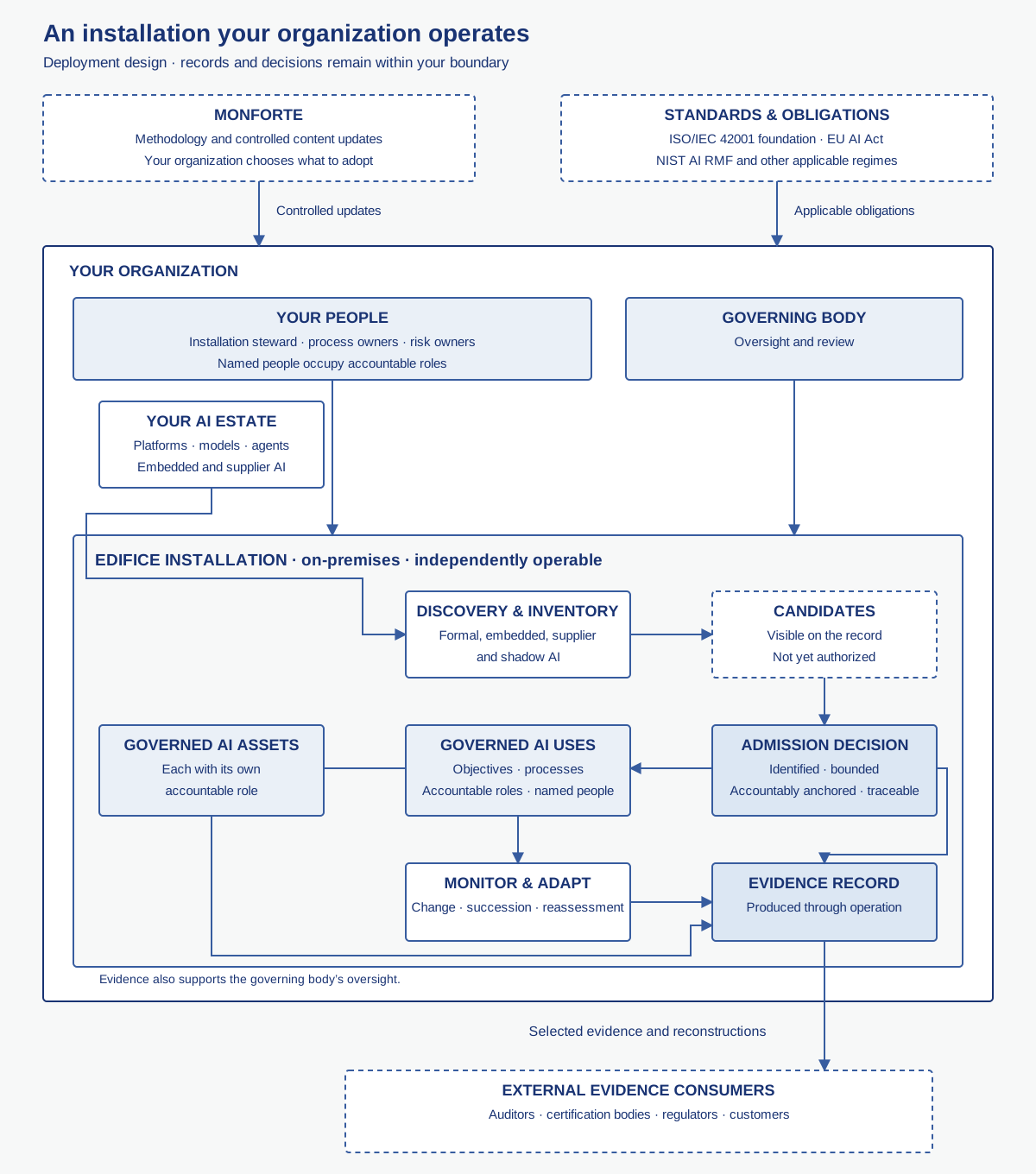
The deployment model is an on-premises installation designed to operate independently. Your organization holds its governance records, evidence and decisions within its own boundary. Monforte maintains the methodology and supplies controlled content updates; your organization decides which updates to adopt and when.
Edifice is intended to sit alongside existing management systems, GRC tooling and business-process documentation. Its evidence exports are intended for internal review and selected external examination, including by auditors, certification bodies, regulators and customers. Specific connections and export arrangements form part of implementation scope.
Build on authority that already exists.
The installation needs an infrastructure steward to maintain it, process owners to anchor accountability for AI uses, asset owners for supporting assets, and risk owners in relevant functions such as security, privacy, legal, safety and quality. The governing body retains oversight. Training supports the people who carry these responsibilities.
Phased adoption
Begin with one use. Expand by process.
Install and discover
Establish the installation and its steward. Discover the AI estate and record candidates, including the uses that still need governance.
Govern one use end to end
Select one consequential AI use. Anchor its responsibilities, satisfy admission conditions and establish its operating limits and evidence.
Expand by process
Extend to other business processes and their AI uses. Bring process owners, asset owners and risk owners into the same structure.
Operate and demonstrate
Maintain monitoring, succession and reassessment. Use the operational record to support internal review and external examination.
Who it is for.
Organizations that need to stand behind their AI use: financial services, healthcare, critical infrastructure, industry, government, legal and professional services, and other enterprises with consequential AI decisions. Relevant leaders include process owners, security and risk executives, AI-governance and compliance leaders, and boards exercising oversight.
Services around the installation.
Engagements may include discovery workshops, implementation support, ISO/IEC 42001 readiness work, and training and competence development for accountable roles. These are services scoped with the organization. Research informs the architecture, while education and professional services support its operation.
Bring a high-level description of one AI use, the business process it supports and the accountability question you need to answer.
Discuss your governance needs ↗